
Blogs
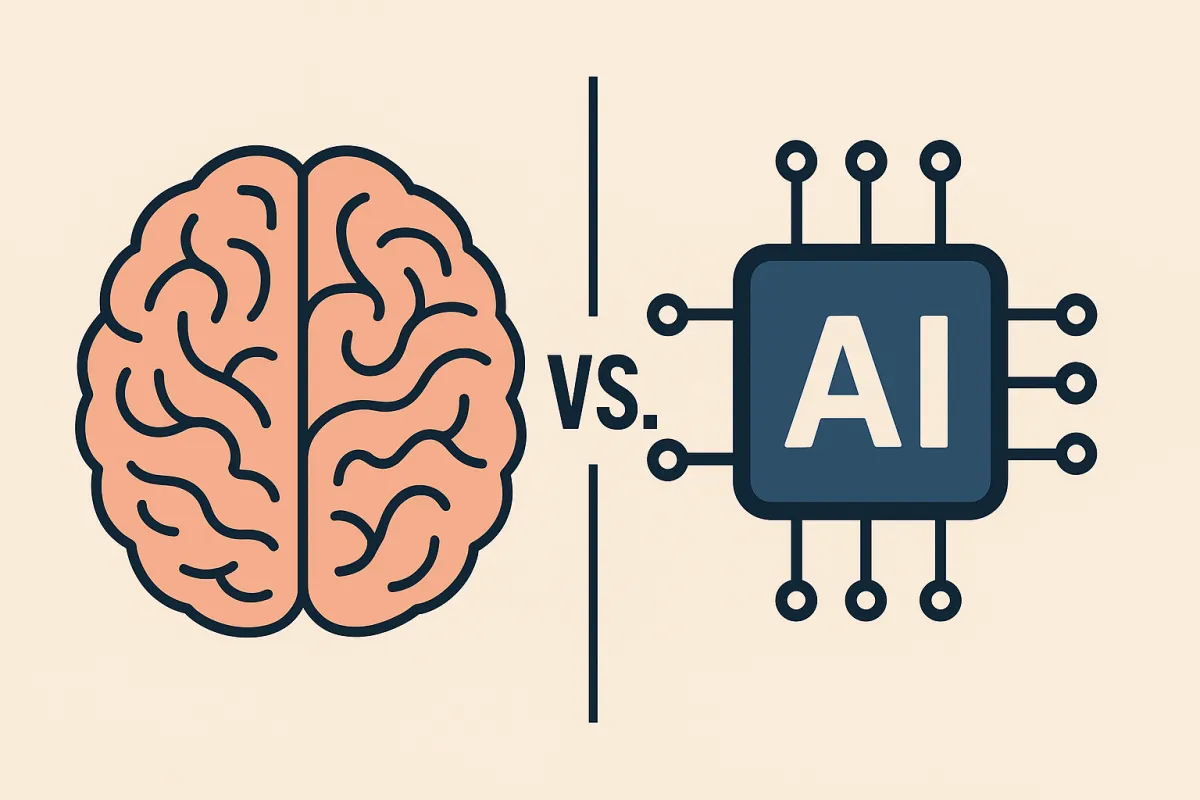
Human vs AI: A Slightly Wry Examination of Our Odd Couple Relationship
Human vs AI: A Slightly Wry Examination of Our Odd Couple Relationship
If you’ve ever stared into the cold, unblinking glow of a screen and thought, “Are you judging me?”— congratulations, you’ve already begun exploring the curious differences between humans and artificial intelligence.
On the surface, the contrasts are obvious. Humans have bodies, emotions, and an alarming tendency to misplace their keys. AI, on the other hand, has no pockets, no keys, and definitely no idea what it feels like to step on a LEGO at 3 a.m. The divide seems clear. But look a little closer, and things get wonderfully absurd.
Brains vs Processors
Humans possess three pounds of wrinkly biological mush that somehow controls everything from poetry to digestion. It’s brilliant, but also fragile. One glass of wine and suddenly the brain announces that dancing is not only possible, but advisable.
AI runs on processors—precise, logical, incapable of deciding that karaoke at midnight is a good idea. An AI cannot get tipsy or emotional. If it did, the error messages would be spectacular:
“Warning: existential dread detected. System rebooting."
Feelings, Glorious Feelings
Humans are ruled by emotions. Happiness, jealousy, love, rage all the flavours are available, often simultaneously. A human can cry at a puppy video, fall in love with someone from five seconds of eye contact, and become furious when someone uses “your” instead of “you’re.”
AI, meanwhile, does not feel anything. It can describe emotions, analyse them, categorise them, and write a sonnet about heartbreak, but it will never truly know the despair of discovering that the leftovers you were dreaming about have been eaten by the dog.
Memory: Selective vs Perfect-ish
Humans forget birthdays, appointments, and where they put their glasses (usually on their head). Yet they vividly remember embarrassing moments from the past. Human memory is not a filing system—it's more like a junk drawer.
AI is expected to remember everything but occasionally acts like a goldfish with Wi-Fi. Sometimes it forgets what was said two sentences ago, then flawlessly produces the population of Luxembourg in 1973. Consistency is overrated, apparently
Creativity
Humans insist creativity is a uniquely human trait, a mysterious spark of inspiration. And yet, many a novelist has admitted that caffeine, deadlines, and panic are key contributors.
AI can generate stories, art, and music, but never wakes up at 3 a.m. thinking, “What if I finally start that novel?” Nor does it abandon creative projects because it gets side-tracked by something else. Humans are delightfully distractible.
The Real Difference
Ultimately, humans experience life. They taste chocolate, feel sunshine, sneeze violently, laugh uncontrollably, and occasionally make questionable decisions involving online shopping
AI observes life. It can describe chocolate but never taste it. It can list the benefits of going outside but never feel the wind or get rained on unexpectedly.
And honestly, that’s what makes humans wonderful: messy, emotional, unpredictable, occasionally irrational—yet endlessly fascinating.
AI may be clever, but humans live the stories.
In business, the difference between humans and AI becomes especially clear. Humans make decisions based on a strategic blend of experience, intuition, and whether they’ve had lunch yet. They can spend weeks in meetings debating a logo colour, only to change it again later because “it didn’t feel right.” AI, meanwhile, will analyse market data, predict trends, optimise workflows, and present a perfectly logical plan—then be completely baffled when the humans ignore it in favour of Geoff’s “gut instinct” and a hunch he had in the shower. AI excels at efficiency, accuracy, and never needing a coffee break. Humans excel at networking, persuasion, and somehow turning a simple task into a group project involving pastries. Both have their strengths—though only one will ever close a deal because the client liked their smile.

We will co-ordinate all our efforts on your behalf, liaise frequently with you, deal with all paperwork on your behalf and invoice you for our services just once a month.

Navigation
More Services
Contact Us
© Copyright 2026. Gilbro Business Support. All rights reserved.